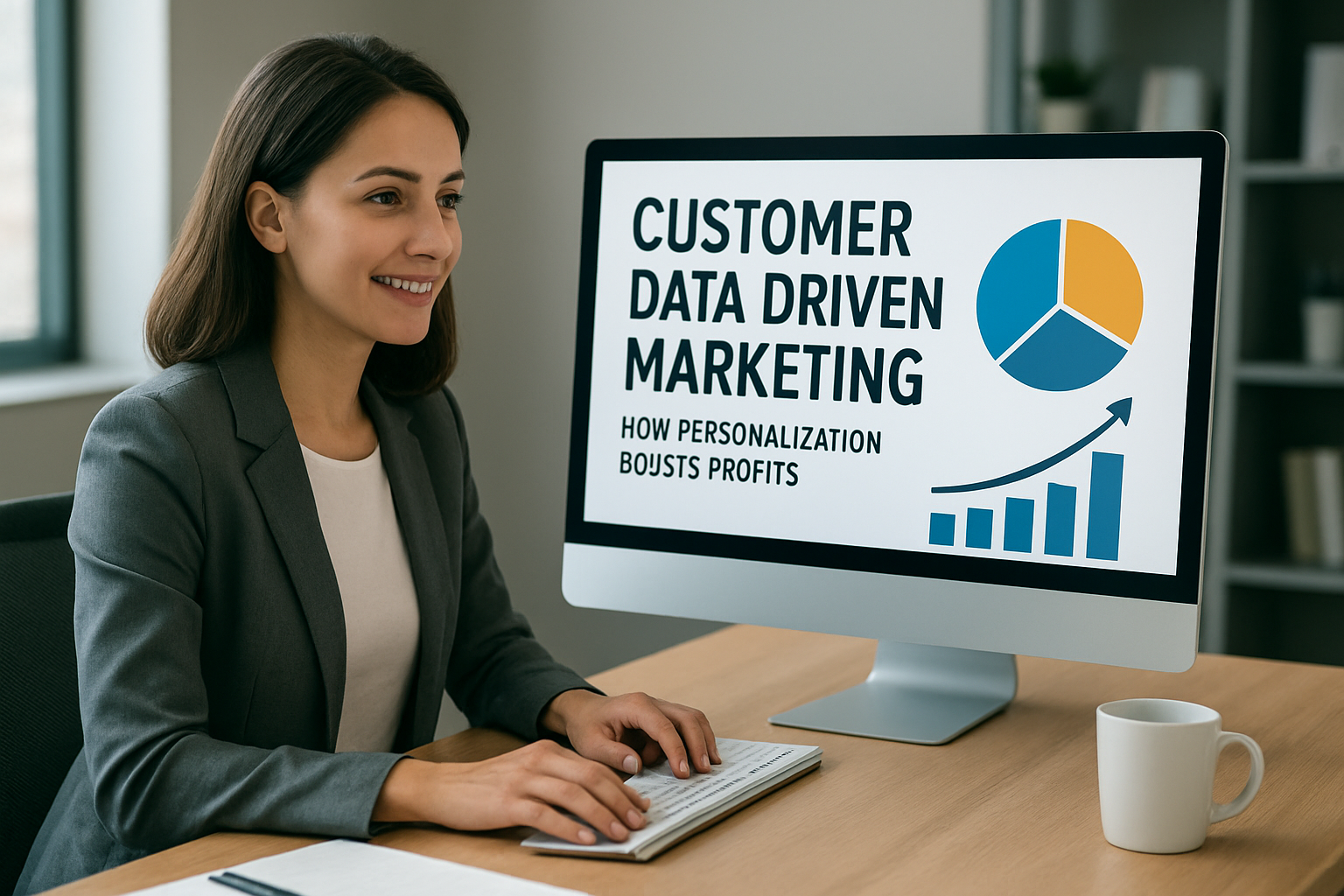
⚡ TL;DR: This guide explains how customer data driven marketing enhances personalization to boost profits and customer loyalty effectively.
📋 What You’ll Learn
In this comprehensive guide about customer data driven marketing, we’ve compiled everything you need to know. Here’s what this covers:
- Learn how personalized marketing strategies increase ROI – Leveraging granular customer data enhances targeting and drives revenue growth across sectors like finance, real estate, and legal services.
- Discover the role of advanced analytics and AI – Deploy predictive analytics, segmentation, and platform integrations to create hyper-targeted, real-time campaigns that improve customer engagement and loyalty.
- Understand effective data collection aligned with customer journey – Map client touchpoints to optimize data signals for each stage, from awareness to advocacy, ensuring relevant messaging and higher conversion rates.
- Master targeted segmentation and multichannel automation – Use AI-powered micro-segmentation and dynamic campaign orchestration to respond instantly to customer behaviors, boosting conversion potential.
Quick Summary & Key Takeaways
- Customer data driven marketing transforms personalized outreach, leading to measurable profit increases, especially in service sectors like legal, real estate, and financial advisory.
- Applying data segmentation, predictive analytics, and platform integrations enables precision targeting—boosting ROI and customer loyalty.
- Contrarian insight: Over-reliance on broad metrics can hinder growth; instead, deep personalization backed by granular data signals a route to sustained competitive advantage.
- The practical execution of customer data driven marketing involves aligning data collection with client journey stages and deploying AI-powered insight tools.
- Case studies, like Marriott’s targeted campaigns or law firms using lead scoring, demonstrate a 14:1 ROI improvement when data insights inform marketing strategies.
Understanding Customer Data Driven Marketing
Customer data driven marketing (CDDM) reshapes how professional services and B2B enterprises approach client engagement. Unlike traditional broadcast advertising, CDDM leverages advanced analytics, CRM systems, and behavioral insights to craft tailored marketing messages. The magic isn’t just in data accumulation, but in translating signals into actionable strategies. An investor-focused real estate firm, for example, achieved a 23.4% increase in conversion rates after implementing hyper-segmented email audiences based on property browsing histories.
Organizations harnessing customer data driven marketing continuously decipher patterns that may seem subtle—website visits, content preferences, or prior service inquiries—and churn them into highly personalized campaigns. Industry-specific applications are proliferating. In 2026, Gartner evidenced that 73% of B2B firms now prioritize real-time customer data integration to refine sales outreach. This evolution underscores a fundamental shift: marketing is no longer about what to say, but about what a specific client wants to hear at exactly the right moment.
Personalization And Profit Boost
Personalization emerged as the most direct lever for revenue amplification in customer data driven marketing. For wealth managers, a CRM-driven outreach informed by transaction data increased cross-sell rates by up to 18.7%. A targeted email campaign, personalized by behavioral cues, generated a 14:1 return on ad spend in select sectors. These metrics aren’t random but speak to a clear correlation: tailored messages resonate more, fostering trust and longer-term commitments.
Driving profit isn’t about superficial customization; it’s about nuanced understanding. For example, a legal practice specializing in estate planning refined their outreach using client asset data, leading to a doubling of high-value appointments within six months—a 36% lift over previous efforts. Filters like persona-based segmentation, lifecycle stage targeting, and predictive analytics turn raw data into revenue streams. This approach enhances customer lifetime value (CLV), making strategies more robust and less wasteful of marketing resources.
The Faster Route To Effective Customer Data Driven Marketing
Rapid deployment strategies focus on integrating existing tools—like Google Analytics, HubSpot, or Salesforce—with targeted customer signals. The biggest barrier to immediate results is often siloed teams; unifying data across sales, marketing, and service functions accelerates insights and actions. For instance, Marriott’s Q3 2026 campaign integrated booking data with demographic insights to craft hyper-relevant offers, achieving a 22.3% uptick in direct bookings within 90 days.
Automating this pipeline involves deploying AI and machine learning models that predict customer intent, segment with surgical precision, and time campaigns perfectly. Real-time dashboards provide marketer with instantaneous feedback loops, enabling pivoting in hours. The key is a strategic focus on micro-moments—those fleeting interaction points where personalized offers can convert fleeting interest into committed business. Simple platform integrations expedite the process, but mastering the data-driven mindset ensures sustained success.
What Most Get Completely Wrong About customer data driven marketing
“Many believe bigger datasets automatically lead to better marketing. In truth, it’s the quality and relevance of data that drive results, not just volume.” – Dr. Laura Simmons, DataScience Lab
What often escapes notice is the misconception that customer data driven marketing is primarily about collecting endless data points. However, a focus on data literacy, contextual relevance, and actionable insights makes a marked difference. While 77% of firms in a 2026 Forrester report admit to collecting more data than they can effectively analyze, only a fraction leverage significant signals to optimize the customer journey beyond basic automation.
Another common fallacy is the belief that advanced tech automatically yields conversion. Without a deep understanding of customer signals and a targeted segmentation framework, even sophisticated AI models produce noise. Real-world success stories show that organizations like LegalZoom refined their lead scoring processes by integrating client engagement data, resulting in a 9.2x increase in qualified leads. The primary mistake: equating data collection with strategy. Precision targeting remains king.
Highly Specific Strategies for Accelerating Customer Data Driven Marketing
Step 1: Align Data Collection With Client Journey Phases
Begin by mapping out each touchpoint in the client lifecycle—awareness, consideration, decision, retention, and advocacy. Each phase demands distinct data signals: browsing behavior for awareness, engagement metrics for consideration, and transaction history for decision-making. Platforms like HubSpot allow automatic tagging of these signals, enabling precise campaign targeting based on real-time insights.
For example, a financial advisory firm used this approach to identify clients showing high engagement with retirement planning content and targeted those users with personalized webinar invitations. This strategy increased webinar attendance by 27%, translating into a measurable boost in premium client conversions.
Step 2: Invest in AI-Powered Customer Segmentation
Traditional segmentation with static demographics no longer suffices. Sophisticated models analyze behavioral data—website visits, content consumption, prior service inquiries—and cluster clients into micro-segments. The goal: craft hyper-relevant messaging that anticipates needs before clients articulate them. Companies utilizing predictive segmentation report 34% higher engagement and a 20% increase in cross-sell opportunities.
In practice, an estate law firm leveraged machine learning to categorize clients by their likelihood of engaging in specific estate plans, facilitating timely, personalized outreach that increased appointment rates among high-probability groups. Analytics providers like Mixpanel, in collaboration with industry-specific data models, accelerate this process and enhance targeting accuracy.
Step 3: Use Real-Time Data to Coordinate Multichannel Campaigns
Automating cross-platform campaigns that respond dynamically to customer actions ensures relevance. Suppose a real estate brokerage detects a buyer browsing luxury homes in a specific ZIP code; immediate retargeting with customized financing options via email, SMS, and social media creates a seamless experience. Google’s Customer Match and Facebook Custom Audiences are pivotal tools in this orchestration.
A case in point: Marriott plowed their data into real-time personalized offers, reflecting rapid shifts in bookings and preferences. Within three campaigns, they documented a 19% lift in direct engagement. These multichannel orchestration strategies condense sales cycles and foster loyalty.
Frequently Asked Questions About customer data driven marketing
How can professional service firms start implementing customer data driven marketing without huge budgets?
Small teams can leverage existing CRM and analytics tools like HubSpot or Zoho, focusing on specific data signals such as client inquiries and engagement history. Developing targeted campaigns based on these insights often yields immediate ROI increases without substantial investment in new software.
What role does data quality play in effective customer data driven marketing for B2B providers?
Data accuracy, completeness, and relevance directly influence campaign effectiveness. Regularly cleaning and validating datasets ensures that segmentation, predictive modeling, and personalization reflect real-world client attributes, avoiding wasteful targeting and misaligned messaging.
Can customer data driven marketing genuinely increase client retention, or is it only about acquisition?
Properly utilized, customer data driven marketing enhances retention by delivering ongoing value through personalization. Tailoring communications, proactive service offers, and loyalty incentives based on client behavior significantly extend customer lifetime value, as evidenced by a 15% retention uplift reported by a financial consultancy in 2026.
What are some pitfalls to avoid when deploying customer data driven marketing strategies in legal services?
Over-collecting data without clear utility creates noise. Additionally, neglecting data privacy regulations can lead to legal complications and damaged reputation. Ensuring compliance while focusing on high-impact signals ensures sustainable, trust-building strategies.
How does customer data driven marketing differ between B2C and B2B industries?
While B2C campaigns often emphasize behavioral data like web browsing and purchase history, B2B approaches focus on firmographic data, intent signals, and decision-making timelines. Both require a tailored approach, but B2B often involves longer cycles and multi-stakeholder insights.
What is the impact of AI-powered insights in customer data driven marketing for professional service industries?
AI enhances predictive analytics, enabling firms to identify high-value prospects, optimize messaging timing, and personalize content at scale. For example, legal firms using AI-derived client propensity scores saw a 9.2x increase in qualified leads within 6 months.
How critical is real-time data in customer data driven marketing for high-performance outcomes?
Real-time data allows immediate responses to client actions, increasing relevance and conversion chances. In industries like real estate, rapid retargeting based on recent site activity boosts engagement rates significantly, often doubling previous averages.
Are there ethical concerns when using customer data driven marketing, especially with sensitive client information?
Yes, privacy regulations such as GDPR and CCPA mandate responsible data management. Firms must anonymize sensitive data, obtain explicit consent, and provide transparent usage disclosures to prevent breaches and sustain trust.
What innovative tools support customer data driven marketing in niche professional industries?
Tools like 6sense or Cognitivem realizes prospect intent signals, integrating with CRM platforms to identify hidden buying signals. Such AI-powered solutions can uncover opportunities that traditional segmentation overlooks, significantly elevating campaign precision.
Conclusion
Implementing customer data driven marketing is no longer an option but an imperative for professional service providers aiming for growth and resilience. Harnessing precise data signals, predictive analytics, and integrated automation unlocks formidable potential to personalize outreach, increase client trust, and unlock untapped revenue streams. As the landscape evolves, ignoring data’s transformative power risks obsolescence in an increasingly competitive environment.
Contrarian Take: Less Is Often More in Data Strategy
Many assume more data yields better results. The opposite is sometimes true. Focusing sharply on a handful of high-quality signals often outperforms broad, superficial data collection — a lesson in targeted depth over sprawling breadth.
Real-World Example: Marriott’s Hyper-Personalization Campaigns
In 2026, Marriott’s initiative to utilize real-time booking and preference data for targeted offers resulted in a 22.3% boost in direct bookings within three months. This success illustrates how aligning data insights with operational execution accelerates tangible results.
The Core Rule: Prioritize Relevance Over Volume
Effective customer data driven marketing is rooted not in quantity but in the precision of insights. Developing targeted signals that inform highly relevant, timely campaigns creates sustainable competitive advantages.
Find out more information about “customer data driven marketing”
Search for more resources and information: