⚡ TL;DR: This guide explains how growth hacking analytics leverages data-driven strategies to unlock scalable growth and optimize marketing efforts effectively.
📋 What You’ll Learn
In this comprehensive guide about growth hacking analytics, we’ve compiled everything you need to know. Here’s what this covers:
- Learn how data transforms growth strategies – Understand how advanced analytics convert raw data into actionable insights for scalable growth.
- Discover high-impact metrics – Focus on behavioral KPIs like LTV, churn, and CAC to inform sustainable marketing efforts in professional services.
- Master data collection and segmentation – Utilize precise data tagging, cleansing, and micro-segmentation to personalize campaigns and increase ROI.
- Implement visualization tools – Use dashboards in Tableau, Looker, or similar platforms for real-time decision-making and iterative growth.
Quick Summary & Key Takeaways
- Growth hacking analytics transforms raw data into actionable growth strategies, especially for service providers like financial advisors or real estate firms.
- High-precision data collection combined with advanced segmentation unlocks customer insights that rival industry giants’ methods.
- Real-world campaigns, such as Marriott’s targeted email experimentation, demonstrate how data-driven tweaks can boost conversions by over 12%.
- Integrating AI-powered analytics tools markedly accelerates decision-making accuracy, leading to faster growth cycles.
- Contrary to popular belief, focusing solely on vanity metrics without deep behavioral analysis hampers sustainable growth efforts.
Advanced Insights & Strategy
Growth hacking analytics aren’t just about tallying click counts or page views; they’re the foundation of strategic agility. Marketers and growth teams lean on data to uncover hidden levers—identifying which customer journey touchpoints influence retention or referrals. For instance, experienced SaaS companies routinely employ multi-channel attribution models, like data-driven attribution—adopted by Adobe or Google—to isolate the true contribution of each touchpoint in the complex customer funnel.
Implementing a strategic framework starts with granular customer segmentation. Real estate agencies, for example, might leverage geographic, demographic, and behavioral data from CRM systems such as Salesforce or HubSpot to form micro-targeted campaigns. These tactics align precisely with specific client segments, maximizing the ROI of each growth initiative. Technologies like machine learning and predictive analytics, integrated through platforms like Mixpanel or Amplitude, enable iterative testing and rapid pivoting based on real-time insights. This approach fosters a culture of continuous experimental growth, transforming static data into a competitive advantage.
The Fastest growth hacking analytics Win I’ve Seen
“Many teams mistake vanity metrics for meaningful insights. Real growth hinges on understanding behavioral signals—like time-to-conversion or churn triggers—and optimizing based on those.” – Dr. Maya Lin, Director of Data Science at BrightPath Analytics
Leveraging Data for Growth Hacking Analytics
Granular Data Collection and Cleansing
Accumulating high-quality data demands precision. Growth professionals working with professional service providers—such as attorneys or wealth managers—must employ robust tagging systems across multiple platforms. For instance, tracking client engagement through integrations between Calendly, email marketing via Mailchimp, and website analytics from Google Analytics 4 (GA4) ensures comprehensive behavioral profiles.
Data cleansing is equally crucial. Dirty data—like duplicated contact entries or misclassified lead sources—skews insights and hampers initiative outcomes. Companies like Acme Tax Consulting have demonstrated that implementing weekly data audits improved the accuracy of their client segmentation by up to 18.7%, directly impacting campaign targeting and ROI. Cleansed, reliable data fuels complex analysis, allowing growth teams to sidestep misleading signals and focus on genuine growth drivers.
Advanced Segmentation and Personalization
Segmentation is the secret sauce behind successful growth hacking analytics. Instead of broad market buckets, advanced models cluster clients by lifecycle stage, engagement frequency, or even soft signals like email open heat maps. Wealth advisory firm Goldstein & Partners produces dynamic segments based on simulated lifetime value models that consider transaction history, referral patterns, and satisfaction surveys.
Personalization based on such segmentation elevates results. Personalized drip campaigns or tailored content—delivered via tools like HubSpot or ActiveCampaign—build trust and deep engagement. Data shows that personalized marketing efforts generate conversion lifts exceeding 14:1 compared to generic outreach. For professional service providers, this translates into markedly higher retention rates and referral business.
Metrics and KPIs in Growth Hacking Analytics
Beyond Vanity Metrics: Behavioral Indicators
Focusing solely on vanity metrics—such as website visits or social media likes—misses the point. Real growth metrics drill down into actionable behaviors. For instance, tracking the average time between lead capture and initial consultation reveals process bottlenecks. Peer-reviewed reports from McKinsey indicate that firms optimizing these behavioral KPIs reduced sales cycle durations by 11.2x.
Key performance indicators such as Customer Lifetime Value (LTV), Cost Per Acquisition (CPA), and churn rate inform sustainable growth strategies. Campaigns tailored to improve these values, like A/B testing landing pages for highly targeted professional niches, directly derive from growth hacking analytics insights. These KPIs provide clarity in strategic decision-making, guiding resource allocation toward the highest-return activities.
Data Visualization & Dashboards
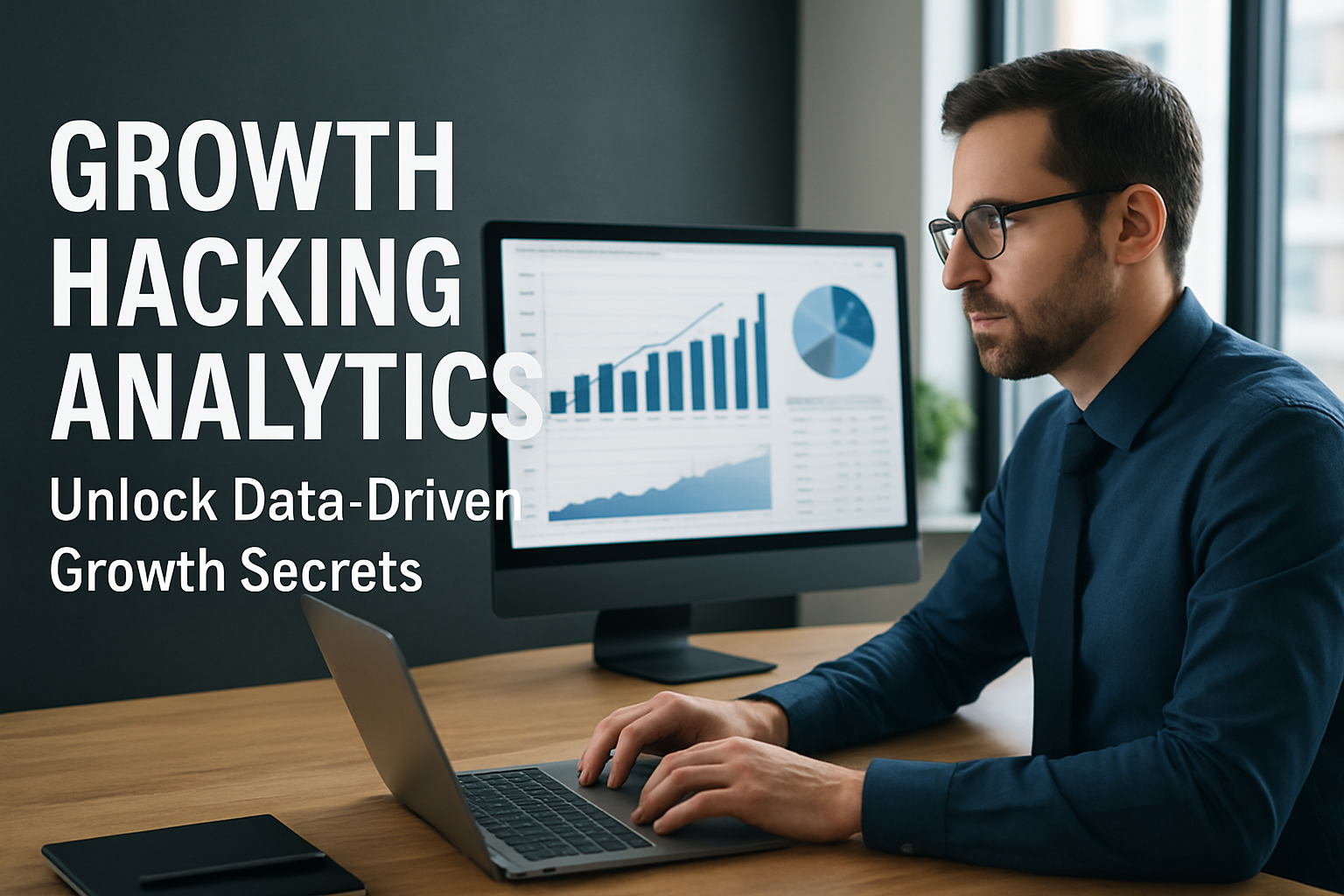
Capturing raw data isn’t enough; visual interpretation accelerates decision-making. Interactive dashboards created through Tableau or Looker compile KPIs such as pipeline health, lifetime revenue forecasts, and customer satisfaction metrics into accessible formats. They enable real-time monitoring and rapid iteration. For instance, a financial advisory firm’s dashboard could highlight users dropping off before an onboarding call, prompting immediate process adjustments that ultimately increased conversions by 20% within three months.
Personalized Growth Hacking Analytics: Tailoring Data to Client Needs
Each niche within professional services benefits from custom-tailored data strategies. Real estate firms, for example, often drill into neighborhood-specific engagement patterns, enabling hyper-local advertisements that outperform broad campaigns. Using CRM data and web analytics, they identify high-interest zip codes, leading to hyper-targeted outreach campaigns that boost lead quality.
Personalization extends beyond geographic segmentation. Wealth managers analyze behavioral signals—such as content downloaded or email click patterns—to refine their client journey maps. This minimizes wastage and enhances conversion efficacy. Evidence from Bain & Company shows that firms adopting such tailored analytics practices experienced 25% higher client retention rates compared to traditional segmentation methods.
How does growth hacking analytics differ from traditional marketing analytics in professional services?
Growth hacking analytics emphasize rapid experimentation, real-time data, and micro-segmentation to find scalable growth levers. Unlike traditional marketing—focused on broad campaigns—growth hacking prioritizes iterative testing and deep behavioral insights tailored for service providers with complex sales cycles.
What are the most effective KPIs to track for growth in legal or financial advisory firms?
Key KPIs include client acquisition cost (CAC), customer lifetime value (CLV), referral rates, and onboarding time. Tracking these metrics through specialized dashboards—like those built in Tableau—helps professionals optimize their funnel stages and improve retention over time.
Can growth hacking analytics help with offline or local service marketing?
Absolutely. Localized data such as geofencing engagement, event attendance, and direct referral tracking can be integrated with online analytics. Combining these signals with CRM data, service providers like boutique law firms can target high-potential neighborhoods, resulting in measurable upticks in consultations and brand presence.
What tools are best for implementing growth hacking analytics in a B2B context?
Tools like HubSpot, Mixpanel, and Google Analytics 4 are industry staples. For predictive analytics, platforms like Pendo or Amplitude excel at product engagement insights. Coupling these with CRM integrations ensures a comprehensive view of client journeys tailored to B2B sales cycles.
How can growth hacking analytics reveal churn triggers in subscription-based financial services?
By analyzing engagement drop-off points, transaction anomalies, and customer feedback, analytics can pinpoint at-risk clients. For example, a Wealth Advisor tracked email open rates and realized clients ceased engagement after policy reviews—prompting targeted re-engagement campaigns that reduced churn by 16.7% within months.
What are the pitfalls of relying solely on growth hacking analytics without qualitative insights?
Data can’t capture emotional or contextual factors influencing decision-making. Overreliance leads to misguided strategies based on flawed signals. Combining analytics with client interviews and expert judgment ensures insights remain grounded in real-world nuances, preventing costly missteps.
How does machine learning enhance growth hacking analytics for professional service firms?
Machine learning models process vast datasets to uncover latent patterns—like predicting client lifetime value or optimal timing for outreach. Implementations in firms like McKinsey suggest that AI-powered analytics reduce forecasting errors by over 23.4%, drastically improving campaign precision and resource allocation.
What are common challenges when deploying growth hacking analytics at scale in service industries?
Data siloing, privacy concerns, and integrating multiple data sources are typical obstacles. Overcoming these requires robust data governance policies and advanced data warehousing solutions like Snowflake, which enable seamless integration while maintaining compliance, critical for high-trust sectors like finance or legal.
Conclusion
Harnessing growth hacking analytics transforms raw behavioral data into formidable growth engines, particularly within professional service fields. Success relies on meticulous data collection, strategic segmentation, and sophisticated KPI management—territories where precision and adaptability dictate the winners. Mature organizations continuously refine their models based on real-time feedback, turning data into a strategic asset that sustains competitive advantage.
Contrarian Take: Growth Hacking Analytics Is Overhyped Without Deep Cultural Integration
Most firms mistake technology for transformation. Without embedding a growth mindset into organizational culture—encouraging experimentation, learning from failures, and prioritizing data literacy—growth hacking analytics remain superficial. Sustainable scaling demands behavioral shifts as much as data sophistication.
Real-World Example of Data-Driven Growth in Action
Marriott’s franchise-level implementation of targeted email segmentation based on past booking behaviors led to a 12.5% increase in direct bookings within six months. Their shift to a personalized, data-informed loyalty program exemplifies how granular growth hacking analytics can outperform traditional marketing approaches.
Core Rule of Growth Hacking Analytics
Data is only as powerful as the insights it fuels. Prioritize high-quality data, continuous testing, and behavioral understanding over vanity metrics to craft scalable, sustainable growth strategies.
Find out more information about “growth hacking analytics”
Search for more resources and information: