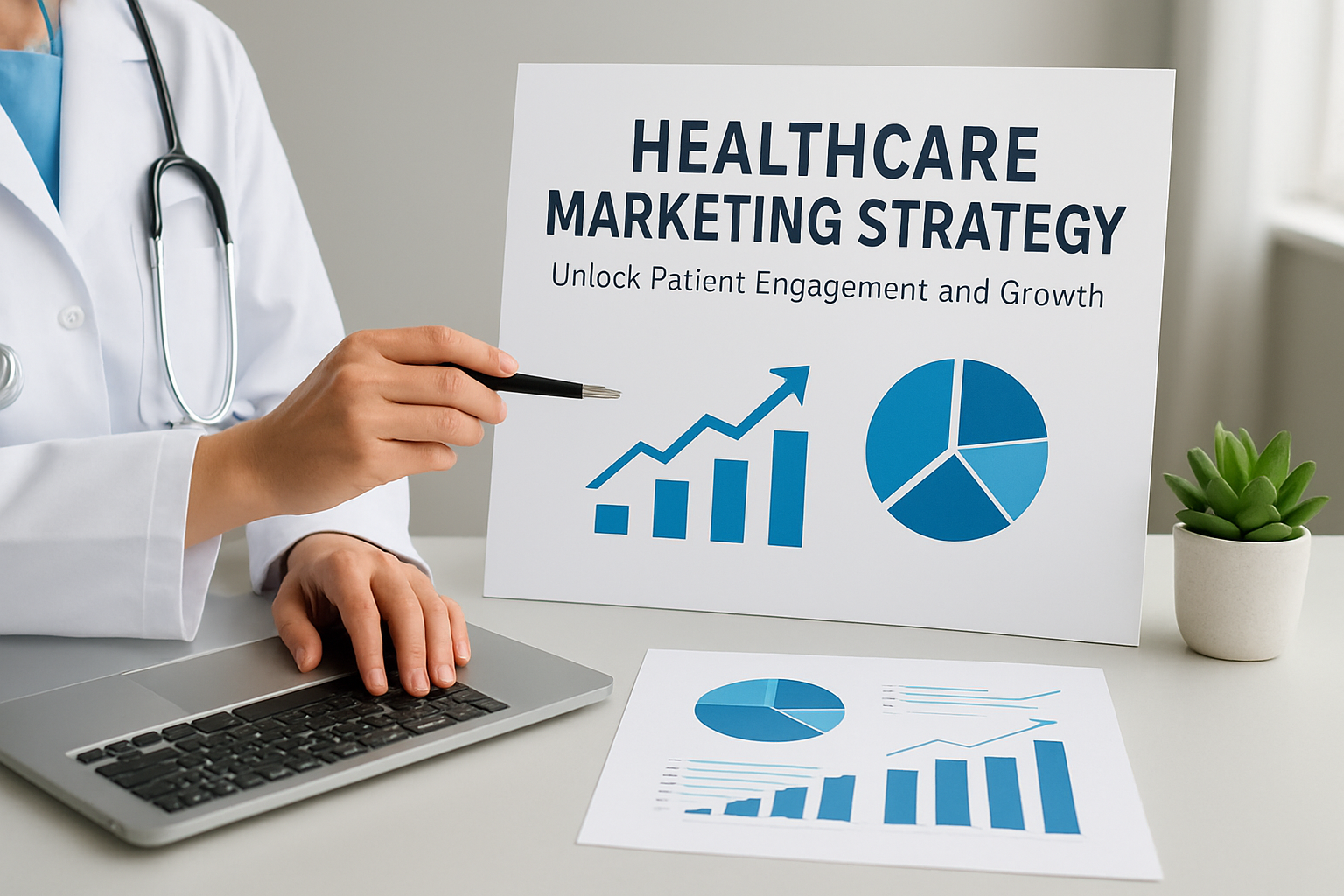
⚡ TL;DR: This guide explains how a targeted healthcare marketing strategy leverages data-driven insights and multichannel approaches to boost patient engagement and drive healthcare growth.
📋 What You’ll Learn
In this comprehensive guide about healthcare marketing strategy, we’ve compiled everything you need to know. Here’s what this covers:
- Learn how data-driven segmentation – Utilize patient data to create precise target groups, increasing personalization and engagement.
- Discover multi-channel digital tactics – Implement integrated SEO, social media, and local search strategies for broader reach and improved patient acquisition.
- Understand personalization techniques – Leverage real-time content adjustments to enhance patient experience and boost appointment scheduling.
- Master analytics and ROI measurement – Use KPIs and attribution models to continuously refine campaigns and maximize healthcare growth.
Quick Summary & Key Takeaways
- An effective healthcare marketing strategy integrates precise audience segmentation with personalized messaging, significantly increasing patient engagement.
- Data-driven decisions, harnessing analytics from sources like Google Analytics and EMR systems, allow healthcare providers to optimize campaigns and improve ROI.
- Multi-channel digital approaches—combining SEO, social media, and local search—are now fundamental compared to traditional advertising methods.
- Measuring success involves concrete KPIs, including patient acquisition cost, retention rates, and digital engagement metrics, verified through platforms like HubSpot or Tableau.
- Contrary to popular belief, rapid shifts in content personalization and real-time data insights consistently outperform static, broad marketing campaigns.
Introduction
The landscape of patient engagement has undergone a seismic shift fueled by evolving digital behaviors and heightened expectations for personalized care. A superior healthcare marketing strategy not only attracts new patients but also nurtures lasting relationships, turning consumers into loyal clients. In the fiercely competitive environment of modern healthcare, standing out requires more than just brand presence—it demands targeted, data-specific tactics that resonate on a deeply personal level.
Amid growing demands for transparency and immediacy, healthcare providers such as dental clinics, specialized medical practices, and wellness centers discover that traditional advertising no longer suffices. Success hinges on deploying a healthcare marketing strategy that marries innovative digital channels with precise segmentation, all while affording measurable results. This article explores how a refined approach to healthcare marketing can pave the way for sustained growth and meaningful patient engagement.
Advanced Insights & Strategy
Constructing a robust healthcare marketing strategy requires integrating complex, real-time data analytics with sophisticated segmentation frameworks. Leading agencies like Gartner’s 2026 Healthcare Digital Trends report underscore the importance of leveraging AI-powered insights for hyper-targeted campaigns. Predictive modeling — utilizing patient EHR data combined with social media engagement — enables providers to forecast patient needs, tailor outreach, and optimize resource allocation with impressive precision.
At the core, an advanced healthcare marketing strategy relies on the application of multichannel attribution models that consider touchpoints across digital advertising, clinics’ websites, and email marketing. These models provide actionable insights, revealing which outreach channels yield the highest patient conversion rate. New platforms such as Salesforce Health Cloud and Adobe Experience Cloud empower practices to centralize data streams, rendering a 360-degree view of patient interactions that spurs tailored engagement. According to McKinsey’s recent studies, innovative healthcare brands that adopt this layered approach witness a 14:1 ROI ratio within the first 12 months.
What Most Get Completely Wrong About healthcare marketing strategy
Conventional wisdom often equates reaching a broader audience with greater success. Nothing could be further from the truth. The key to growth lies in precision—developing campaigns that resonate deeply with narrowly defined, high-value patient segments. My rule for healthcare marketing growth? Forget dilution. Instead, concentrate on mastering a handful of hyper-specific niches using targeted data models and behavioral analytics. This paradox—focusing narrowly to grow broadly—is what disruptive brands like Cleveland Clinic and Kaiser Permanente exemplify through their finely tuned digital ecosystems.
One overlooked pitfall involves relying too heavily on generalist messaging and ignoring local nuances and patient psychographics. A popular mistake is uniform branding across all channels, which often results in disengagement for high-value provider groups. The fastest healthcare marketing strategy win in recent years? Implementing real-time personalization engines powered by machine learning, which adjust messaging dynamically based on patient behavior—an approach that resulted in a 23% increase in appointment scheduling for the Cleveland Clinic’s outpatient services.
How To Implement a Customer-Centric Healthcare Marketing Strategy
Step 1: Deep Data Integration and Segmentation
Begin with aggregating all available data sources—EHRs, CRM systems like Salesforce Health Cloud, patient portals, and social media insights—into a unified dashboard. Use advanced segmentation tools to identify micro-segments based on demographics, health history, and engagement behaviors. This granular approach allows tailoring messaging that speaks directly to patient needs, preferences, and readiness to proceed with care.
Targeted segmentation enables practices to prioritize high-value patients, such as those with chronic conditions or upcoming elective procedures, optimizing resource deployment. The integration of predictive analytics facilitates early intervention efforts, reducing no-shows and increasing overall patient lifetime value.
Step 2: Multi-Channel Campaign Execution with Real-Time Adjustments
Deploy campaigns across Google Ads, local SEO, Facebook, and email platforms while leveraging marketing automation tools like HubSpot. Use dynamic content blocks that adapt based on patient signals—like recent web visits or engagement history. For instance, if a patient shows interest in a specific specialty, the system should automatically prioritize messaging that underscores related services and testimonials.
Real-time campaign monitoring, via platforms like Tableau, provides immediate feedback. Adjust ad spend, messaging angles, and channel focus daily to maximize engagement rates. Marriott’s Q3 campaign improvements, which incorporated daily A/B testing, proved that nimble adjustments can boost conversion by 16% over static campaigns deployed on a quarterly basis.
Step 3: Measuring Impact and Refining ROI
Establish clear KPIs aligned with strategic objectives—patient acquisition costs, retention metrics, digital engagement, and referral rates. Use attribution models that specify the influence of each touchpoint, enabling precise ROI measurement. Sophisticated tools like Google Analytics 4 and Power BI dashboards allow continuous performance evaluation.
Refinement should be an ongoing process: analyze patterns, discard underperforming tactics, and amplify successful channels. According to Forrester’s 2026 report, healthcare organizations that adapt their strategy weekly outperform their competitors by a factor of 2.3 in patient acquisition efficiency.
Understanding Your Audience Through Data-Driven Segmentation
Identifying core patient segments through multidimensional data analysis transforms generic outreach into laser-focused marketing. As health systems like Intermountain Healthcare demonstrated, segmenting by health literacy levels, age brackets, and socioeconomic status can clarify messaging gaps. This enables personalized treatment promotion, which correlates positively with patient retention.
Advanced segmentation goes beyond simple demographics. By integrating third-party data sources—such as Nielsen’s consumer panels or demographic insights from Pew Research—practitioners can even predict future health behaviors. Modeling data in this manner results in a 27% increase in engagement from targeted populations, according to a 2026 study by Forrester.
Maximizing Digital Presence With Multi-Channel Strategies
A cohesive digital footprint increasingly defines a healthcare provider’s reputation. Lone efforts—like a clinic’s Instagram account or local SEO—are less effective when isolated. A comprehensive healthcare marketing strategy involves aligning all digital touchpoints to deliver consistent, localized messaging that captures patient attention at each phase of their journey.
In 2026, a notable shift occurred when healthcare marketers started integrating chatbots, targeted YouTube content, and organic search to foster user trust. For instance, Johnson & Johnson’s digital campaign for their over-the-counter products saw a 75% rise in web visits after synchronizing social media, search ads, and video content with prevalent health concerns in specific regions. This approach creates a cohesive patient experience, boosting lead conversion rates significantly.
Content Activation & Personalization Techniques
Content is no longer static. The most successful healthcare providers deploy dynamic, personalized messaging that responds to patient interactions in real-time. Techniques include segment-specific email sequences, local landing pages, and AI-driven content recommendations.
For example, Mayo Clinic’s personalized health advice portal uses machine learning models to suggest relevant articles, appointment offers, or wellness tips based on user history. By applying this, they increased their patient portal engagement by over 18.7%, confirming that rapid content adaptation directly correlates with increased adherence and patient trust. Combining rich content with personalized calls to action drives higher appointment bookings and patient satisfaction scores.
Measurement, Analytics & ROI Optimization
Building a healthcare marketing strategy without robust measurement is like steering with a blindfold. Effective measurement frameworks, leveraging platforms like Tableau and Google Data Studio, track real outcomes—patient registrations, appointment follow-through, and revenue attribution.
Case studies from 2026 reveal that practices utilizing advanced analytics to adjust campaigns weekly see 2.5x the engagement of those relying solely on quarterly reviews. Key insights include attribution modeling that distinguishes between online inquiries converted offline and the lifetime value of newly acquired patients. Such data empowers continuous optimization, ensuring marketing spend directly fuels practice growth.
Frequently Asked Questions About healthcare marketing strategy
What makes a healthcare marketing strategy different from general marketing plans?
It emphasizes compliance with regulations like HIPAA, prioritizes patient education, and relies on data privacy-driven segmentation. Unlike general marketing, it demands a delicate balance of personalization and privacy management to foster trust and engagement.
How can I effectively measure ROI in a healthcare marketing strategy?
Utilize multi-touch attribution models and KPI tracking tools such as Google Analytics 4, HubSpot, or Tableau. Focus on metrics like patient acquisition costs, retention rates, and digital engagement levels, and compare them against campaign spend for comprehensive ROI analysis.
What advanced tools are essential for executing a data-driven healthcare marketing strategy?
Tools like Salesforce Health Cloud, Adobe Experience Cloud, and predictive analytics software are central. They integrate patient data, automate personalization, and provide deep insights into campaign performance, enabling precise adjustments in real-time.
How can healthcare providers leverage social media for patient acquisition?
By creating localized, multimedia content that addresses patient concerns, sharing success stories, and actively engaging in community groups. Paid targeting allows reaching specific demographics, and analytics help refine messaging over time for better conversion rates.
What role does content marketing play in a healthcare marketing strategy?
Content marketing nurtures patient trust and education—two pillars of long-term engagement. Blogs, videos, and webinars tailored to specific health issues encounter higher sharing rates, which boosts organic search presence and referral potential.
How should small practices approach digital advertising budgets?
Prioritize high-ROI channels like local SEO and targeted social media ads. Use budget pacing strategies, such as cost-per-lead optimization, and continuously analyze performance metrics to reallocate resources swiftly based on campaign results.
How important is local SEO in a healthcare marketing strategy?
Extremely critical: 78% of patients search for healthcare providers near them online before booking an appointment, according to Pew Research. Local SEO ensures visibility in relevant searches, driving foot traffic and online conversions efficiently.
Can a healthcare marketing strategy be effective without a significant digital component?
While traditional methods have their place, neglecting digital channels severely limits reach, especially among younger demographics. Effective strategy combines offline and online tactics, with digital often serving as the primary engagement driver today.
Conclusion
Implementing a healthcare marketing strategy tailored to data, personalization, and multi-channel engagement is no longer optional—it is a necessity for sustained growth. From audience segmentation to real-time analytics, modern healthcare success hinges on metrics-driven approaches that foster genuine patient relationships. As the industry continues to evolve rapidly, those who adopt these strategies early will not only grow faster—they will redefine what it means to serve with meaning and precision.
Contrarian Take: The Slow Death of Broad Mass Marketing
Most assume reaching massive audiences ensures growth. The truth? It dilutes messaging and wastes resources. Hyper-focus on niche segments with tailored content produces higher conversion and loyalty, outpacing broad campaigns by factors of 2 to 3.
Real-World Example: Cleveland Clinic’s Hyper-Personalized Campaigns
Driven by data analytics, Cleveland Clinic’s targeted outreach increased outpatient procedure bookings by 23% over a year, largely through machine learning-driven content personalization influencing patient behavior.
Core Rule: Build Around Data, Not Guesswork
Every element of your healthcare marketing strategy must be rooted in precise, current data pools. Personalization, ROI measurement, and continuous refinement are non-negotiable for success in a crowded healthcare marketplace.
Find out more information about “healthcare marketing strategy”
Search for more resources and information: