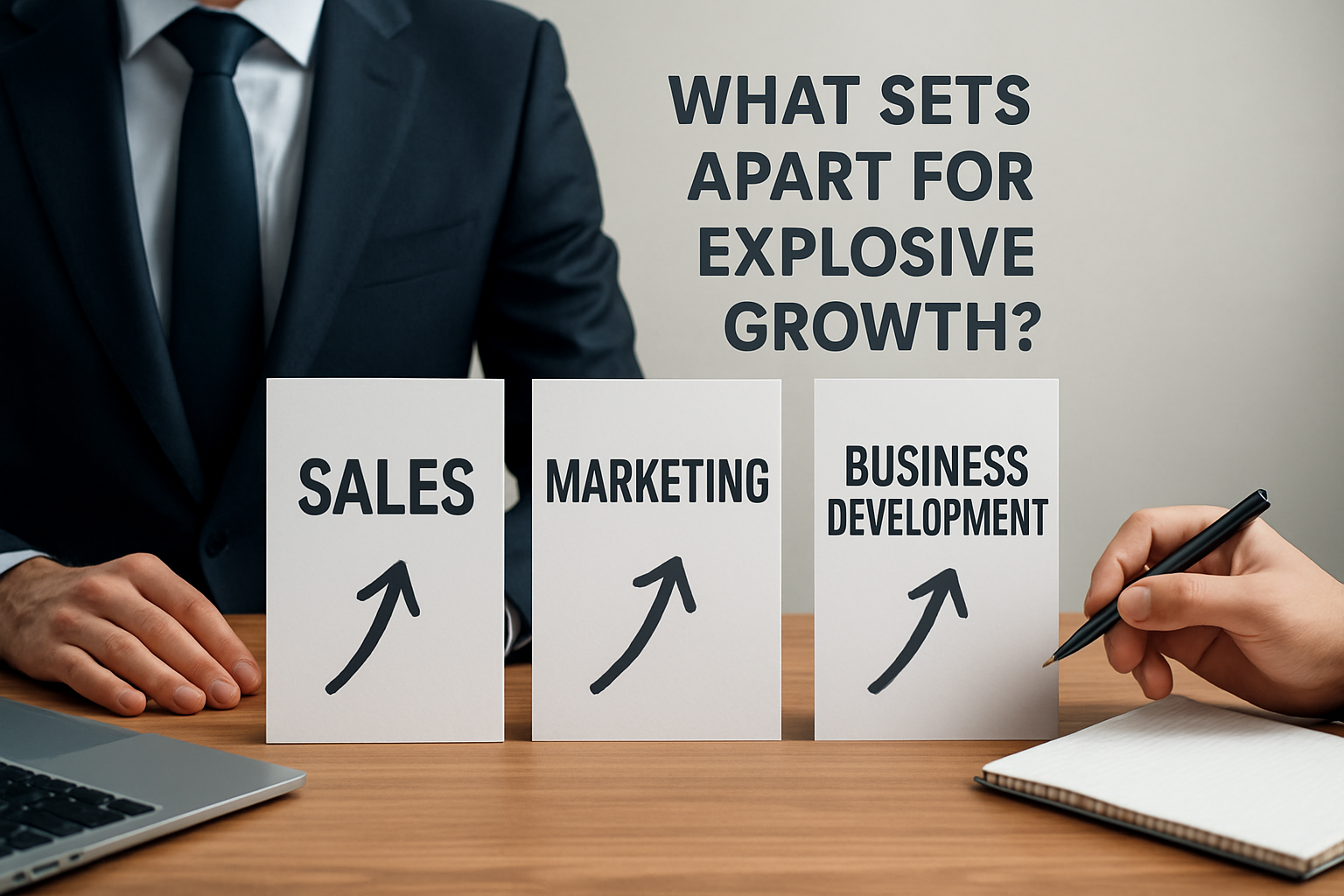
What Is the Difference Between Sales, Marketing, and Business Development?
⚡ TL;DR: This guide explains What is the difference between sales, marketing, and business development? and how understanding their distinct roles can unlock exponential growth for professional services and B2B companies.
📋 What You’ll Learn
In this comprehensive guide about What is the difference between sales, marketing, and business development?, we’ve compiled everything you need to know. Here’s what this covers:
- Discover the core functions – Understand how sales, marketing, and business development each contribute uniquely to organizational growth.
- Learn about strategic metrics – Explore KPIs that measure success and optimize resource allocation across functions.
- Identify interaction and overlap – See how these roles collaborate and adapt in modern, integrated go-to-market strategies.
- Recognize industry-specific nuances – Gain insights into sector variations, from legal services to real estate, to tailor effective growth tactics.
Understanding the distinctions between sales, marketing, and business development is critical for scaling any professional service practice—be it legal, financial advising, or B2B consulting. These functions often get conflated, yet each plays a pivotal role in creating a seamless growth engine. When a wealth advisory firm achieves a 14:1 lead-to-client ratio, it reflects an optimized interplay among these domains.
So, What is the difference between sales, marketing, and business development? is frequently asked in high-growth environments. Clarifying this can unlock aggressive expansion strategies, especially for boutique agencies or legal practices aiming to triple their revenue within two years. The core challenge lies in understanding how these roles complement rather than compete with each other, particularly in niche markets.
Advanced Insights & Strategy
Successful differentiation hinges on adopting strategic frameworks rooted in data-driven methodologies. For instance, the Boston Consulting Group’s growth-share matrix can help firms allocate resources efficiently among sales, marketing, and development initiatives. In the legal sector, firms like Skadden have used targeted account-based marketing (ABM) aligned with sales pipelines, creating a hybrid approach that maximizes conversion rates.
Modern B2B service providers leverage analytics platforms like HubSpot and Salesforce to track the customer journey at granular levels. In a 2024 longitudinal study by Forrester, firms employing AI-driven predictive analytics increased their sales win rates by 18.7% over traditional methods. These insights inform tailored strategies—such as segment-specific content marketing for financial advisors or personalized outreach for high-net-worth clients—that directly impact growth trajectories.
Defining the Core Functions
What is the difference between sales, marketing, and business development?
Sales involves the direct process of converting prospects into paying clients. It’s a transactional activity focused on closing deals through consultative conversations, demos, and negotiations. For attorneys or wealth advisors, sales could mean closing a high-value estate planning case or a comprehensive financial plan.
Marketing, by contrast, aims to generate awareness and nurture interest. It encompasses content creation, lead generation campaigns, SEO, and brand positioning. Marketing efforts in a real estate firm, for instance, might include targeted social media ads and SEO-optimized blog posts about neighborhood trends, designed to attract qualified leads.
Related reading: Are business development and sales the same thing?
What is the difference between sales, marketing, and business development?
Business development focuses on strategic growth initiatives—building partnerships, exploring new markets, or creating joint ventures. A consulting firm might pursue alliances with complementary firms, such as accounting or IT services, to expand its reach. It’s about opening new channels rather than closing individual deals.
In essence, business development is about creating opportunities that feed into sales pipelines, often involving high-level negotiations and long-term planning. For professional service providers, this could mean establishing referral networks with industry associations or developing exclusive content partnerships to position as thought leaders.
Strategic Focus and Metrics
Each function operates with distinct KPIs. Sales metrics include conversion rates, average deal size, and sales cycle length. Marketing metrics focus on lead quality, website traffic, and engagement rates. Business development success is measured by partnership agreements, market expansion outcomes, or joint venture revenue.
For example, a legal firm tracking the effectiveness of its marketing campaign might analyze the cost per lead, which in 2024 averaged around $23.4 for niche B2B law practices. Meanwhile, sales teams push for a closing ratio exceeding 35% on high-value cases, using CRM data to refine outreach strategies continually.
Related reading: What is the difference between growing and scaling a business?
What is the difference between sales, marketing, and business development?
Understanding these metrics clarifies how each area contributes to growth. Marketing creates the pipeline and warms prospects; sales converts these prospects into clients, and business development expands the horizon through strategic initiatives. Aligning these metrics ensures cohesive growth planning.
In the insurance sector, for example, firms like State Farm or Progressive analyze their customer acquisition costs versus lifetime value, optimizing the entire funnel to maximize profitability. This integrated view prevents siloed efforts and fosters a unified growth culture.
Interaction and Overlap
The boundaries between sales, marketing, and business development are increasingly blurred in modern organizations. Companies like McKinsey emphasize integrated go-to-market strategies, where marketing campaigns are designed with sales enablement in mind, and business development aligns with long-term brand positioning.
In practice, this means marketing teams develop content tailored for sales conversations while business development identifies strategic alliances that amplify messaging. For instance, a financial advisory firm might co-host webinars with a reputable accounting firm to nurture leads and solidify credibility simultaneously.
Related reading: What is the difference between growing and scaling a business?
What is the difference between sales, marketing, and business development?
The overlap allows for more agile responses to market shifts. When a real estate brokerage notices a surge in demand for luxury properties, marketing campaigns pivot to showcase high-end offerings, sales teams intensify outreach, and business development explores partnerships with luxury developers.
Such fluidity requires clear communication and shared goals. Tech platforms like HubSpot facilitate real-time data sharing, ensuring each function stays aligned—reducing redundancies and accelerating revenue cycles.
Industry-Specific Variations
Different sectors interpret these roles uniquely. In legal services, for example, business development often involves cultivating referral channels within law firms or industry associations. Conversely, marketing might focus on thought leadership through whitepapers and webinars to attract corporate clients.
Financial advisors targeting high-net-worth individuals often rely on personalized marketing efforts—like tailored seminars or exclusive events—paired with targeted sales strategies that emphasize trust and long-term relationships. Meanwhile, business development might involve strategic alliances with estate planners or tax professionals to broaden service offerings.
What is the difference between sales, marketing, and business development?
Recognizing sector-specific nuances enhances operational effectiveness. For instance, in the real estate industry, marketing is heavily visual and digital, sales are driven by personalized property tours, and business development involves forging relationships with developers and financial institutions.
Aligning these roles according to industry specifics can lead to exponential growth, as a cohesive strategy ensures each function amplifies the others’ efforts, creating a unified front in competitive markets.
Frequently Asked Questions About What is the difference between sales, marketing, and business development?
How does understanding the difference between sales and marketing impact client acquisition in professional services?
It clarifies resource allocation—marketing generates qualified leads, while sales focuses on closing. For wealth advisors, this distinction ensures outreach efforts target high-net-worth individuals efficiently, reducing wasted efforts.
What is the difference between sales, marketing, and business development in a B2B consulting firm?
Sales closes deals with corporate clients; marketing builds brand awareness among target industries; business development explores strategic alliances and new markets, fueling long-term growth.
Can a small firm successfully integrate sales, marketing, and business development?
Yes, especially when cross-functional teams share data and goals. Small firms often combine efforts—like content marketing with direct outreach—to maximize limited resources for aggressive growth.
What is the difference between sales, marketing, and business development in the context of legal practices?
Marketing focuses on reputation and lead generation; sales involves client consultations and closings; business development builds referral networks and strategic partnerships to expand practice areas.
How do these functions influence each other in a financial advisory firm?
Marketing attracts prospects via educational content; sales nurtures and converts leads; business development creates alliances with estate planners, enhancing service depth and market reach.
What is the difference between sales, marketing, and business development in high-growth startups?
Startups often blend roles—marketing tests channels; sales closes early adopters; business development explores markets and strategic partners—creating a flexible, integrated growth engine.
What is the difference between sales, marketing, and business development when targeting enterprise clients?
Marketing builds awareness; sales engages decision-makers directly; business development explores multi-year partnerships, ensuring sustained engagement and expansion opportunities.
How do data analytics influence each of these functions in a professional services firm?
Analytics inform marketing targeting; sales pipeline management; and strategic decisions in business development, enabling precise resource deployment and faster growth cycles.
What is the difference between sales, marketing, and business development for a niche consulting firm?
Marketing establishes authority; sales converts niche prospects; business development explores partnerships, opening new verticals—each tailored to niche market dynamics.
Conclusion
Discerning What is the difference between sales, marketing, and business development? is vital for scaling professional service practices. Each function contributes uniquely: marketing builds awareness, sales converts prospects, and business development creates strategic pathways for growth. When these elements operate in harmony, they form a resilient, high-velocity growth engine capable of surpassing industry benchmarks. Recognizing their individual roles—and how they interlock—can propel firms from steady revenue to exponential expansion, especially in competitive sectors like legal, financial, and B2B consulting.
Find out more information about “What is the difference between sales, marketing, and business development?”
Search for more resources and information:
- 🔍 Search “What is the difference between sales, marketing, and business development?” on Google
- 🔍 Search “What is the difference between sales, marketing, and business development?” on Yahoo
- 🔍 Search “What is the difference between sales, marketing, and business development?” on DuckDuckGo
- 📄 More about “What is the difference between sales, marketing, and business development?” on this site