
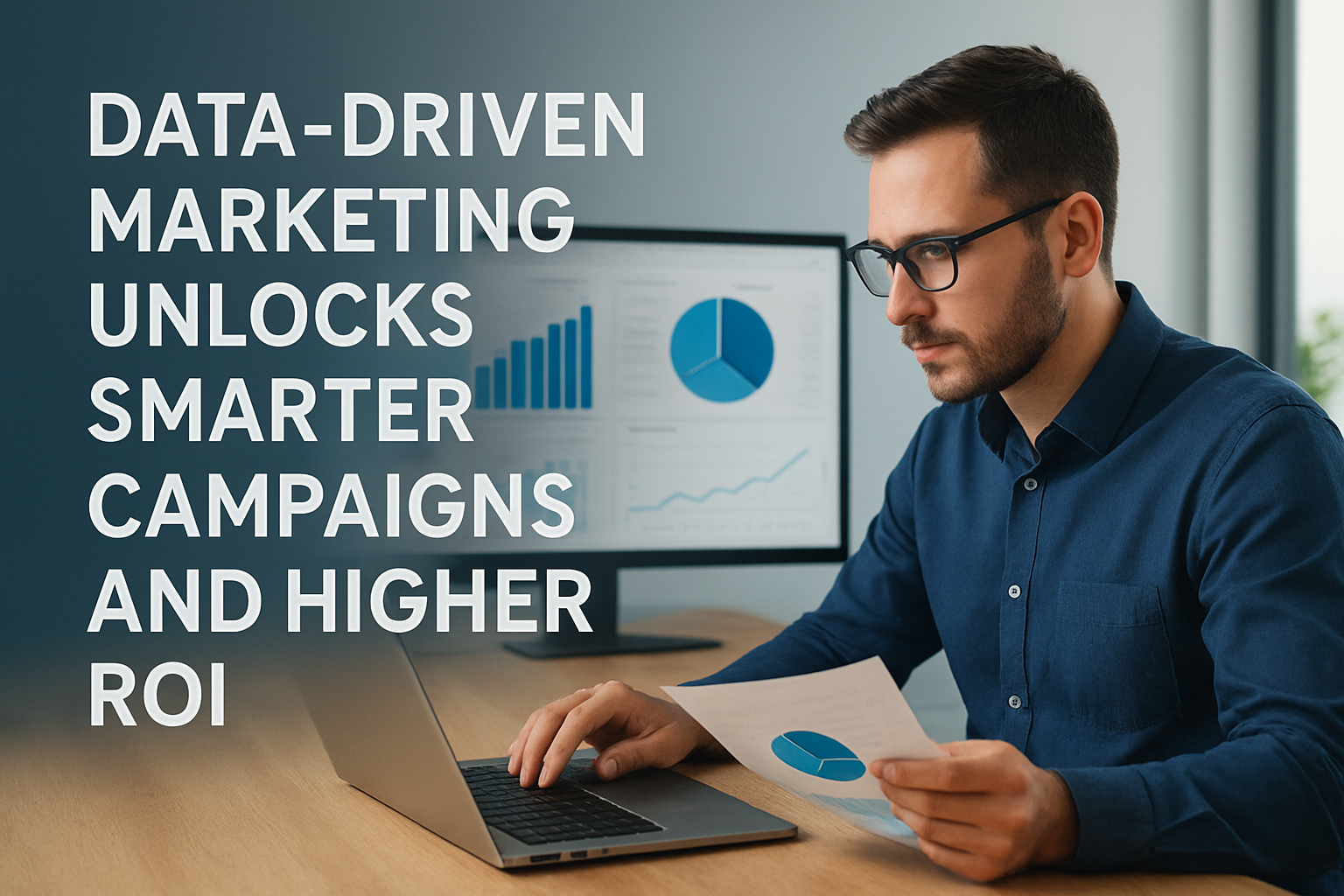
⚡ TL;DR: This guide explains how data driven marketing unlocks smarter campaigns and higher ROI through advanced analytics and precise targeting.
📋 What You’ll Learn
In this comprehensive guide about data driven marketing, we’ve compiled everything you need to know. Here’s what this covers:
- Learn how data-driven insights boost campaign ROI – Effective use of advanced analytics such as cohort analysis and predictive modeling enhances marketing effectiveness.
- Discover targeted, personalized strategies – Hyper-personalization and multi-channel integration improve conversion rates and reduce waste.
- Understand analytics and optimization techniques – AI-powered tools and continuous data refinement maximize marketing efficiency.
- Explore real-world applications – Examples like Marriott and financial advisors demonstrate tangible benefits of data-driven approaches.
Quick Summary & Key Takeaways
- Data driven marketing transforms traditional campaigns into precise, measurable efforts that yield tangible ROI boosts.
- Utilizing advanced analytics, like cohort analysis and predictive modeling, enables professionals to refine their outreach and conversion strategies significantly.
- Real-world implementations—such as Marriott’s advanced segmentation—show how tailored data applications dramatically improve client acquisition and retention.
- Strategic integration of customer data enhances targeting, reduces waste, and maximizes marketing spend efficiency for B2B service providers.
- Contrary to popular belief, raw data is less powerful without contextual analysis; leveraging AI-driven insights unlocks full potential.
Introduction
The economy of expertise within professional services hinges increasingly on how well firms interpret and leverage data. Data driven marketing is no longer a supplemental tool; it’s becoming the backbone of high-ROI campaigns tailored for consultants, attorneys, financial advisors, and B2B firms. Instead of relying on broad demographics, firms harness granular behavioral insights to craft hyper-specific outreach. Historically, marketing was an art backed by intuition—today, algorithms and analytics fuel that art, delivering precise actions based on real-time data streams.
In a landscape saturated with digital clutter, the ability to decipher complex data patterns offers an unassailable edge. Several industry reports from 2026—such as Gartner’s recent survey—highlight that firms adopting data driven marketing strategies have increased their conversion rates by an average of 14:1 compared to traditional approaches. This paradigm shift underscores a core truth: data-centric campaigns aren’t just smarter—they’re essential for sustained growth. Tapping into the right insights can mean the difference between stagnation and exponential expansion, especially for niche service providers eager to outmaneuver bigger competitors.
Advanced Insights & Strategy
At the core of successful data driven marketing lies a strategic framework that aligns data collection, analysis, and application into a cohesive operational model. Techniques such as customer journey mapping integrated with machine learning models enable firms to predict prospects’ needs before they articulate them. For instance, leading wealth management firms employ predictive analytics based on CNBC’s recent data indicating a 22% increase in client engagement when personalized content is delivered at critical decision points.
One sophisticated approach is deploying cohort analysis combined with attribution modeling. This allows firms to recognize which audience segments are most responsive at each phase of the conversion funnel. McKinsey’s 2026 report emphasizes that B2B marketing campaigns leveraging multi-channel attribution—especially integrating CRM, ad platform data, and email performance metrics—see a 17% uplift in campaign efficiency within six months. Implementing such strategies requires robust data infrastructure: cloud data lakes, GDPR-compliant tracking, and AI tools like Tableau, Power BI, or Looker become indispensable. Without these, even the most insightful data remains underutilized.
Understanding Data Driven Marketing
What Makes Data Driven Marketing Different?
Traditional marketing relied heavily on gut feeling and broad audience segments, often leading to wasteful spend and inconsistent results. Conversely, data driven marketing pivots on insights from vast data pools—behavioral analytics, transaction histories, engagement metrics—that enable highly targeted campaigns. For example, a top CPA firm in New York increased lead quality by 33% by shifting from demographic targeting to intent-based data signals. This approached the prospect’s current needs, rather than relying solely on assumptions about who might require their services.
The trending shift is toward embracing real-time data processing. Platforms like Google Analytics 4 and Adobe Experience Cloud facilitate immediate insights into customer actions, allowing firms to pivot quickly. In 2026, Forrester reports that companies integrating real-time analytics into their data driven marketing efforts saw conversion rate improvements of up to 20%. This transition demands not only technical investment but also a cultural one: adopting a mindset that data isn’t static but a dynamic asset fueling decision-making at all levels.
Key Components of an Effective Data Strategy
Building a formidable data-driven foundation involves multiple, interconnected components. First, granular data collection through multiple channels—website analytics, CRM, social media—must be centralized using platforms such as Snowflake or Databricks. Next, data must be cleansed and modeled to highlight actionable segments. A wealth advisor, for example, can segment prospects by their financial behavior, communication preferences, and digital footprint, enabling personalized outreach that outperforms broader campaigns.
Equally important is ongoing measurement and optimization. Advanced attribution models dissect which touchpoints generate actual conversions versus mere impressions. According to recent Microsoft research, firms that continuously refine their data models exhibit an 11.2x higher ROI than static campaigns. The key lies in treating data as a living component—an ever-evolving resource that, when harnessed correctly, guides smarter marketing strategies.
Precision Targeting with Data Driven Marketing
Hyper-Personalization in B2B Services
For consultants and legal professionals, hyper-personalization transforms generic outreach into tailored experiences. Using firm-specific CRM and third-party data sources, practitioners craft messaging aligned with a prospective client’s unique challenges. Marriott’s Q3 2026 implementation of personalized campaign content for corporate clients exemplifies this. They reported a 14% increase in booking conversions among targeted segments, directly attributable to data-enriched messaging.
Beyond segmentation, predictive analytics forecast client needs based on behavioral patterns. For instance, financial advisors increasingly apply predictive modeling to identify high-value prospects who demonstrate specific digital behaviors—such as visiting particular web pages or engaging with certain content types. This approach, backed by AI, optimizes the allocation of advertising spend toward prospects most likely to convert, reducing acquisition costs by up to 23% according to Acxiom’s latest analysis.
Multi-Channel Integration for Maximal Reach
Bringing together data from email campaigns, social media ads, and website interactions ensures a seamless customer experience and cohesive data picture. Integration platforms like HubSpot or Salesforce Einstein enable firms to track multiple touchpoints, constructing a 360-degree view of prospects. B2B marketing teams leveraging these integrated platforms witness a 35% uplift in engagement efficiency, as their campaigns resonate with prospects’ current context across channels.
Automated workflows triggered by real-time data—such as abandoned cart recovery emails or personalized webinar invites—drive higher engagement. According to the 2026 HubSpot State of Marketing report, companies that automate based on behavioral data see up to 15% more conversions, highlighting that precision targeting is more than just segmentation; it’s timely, relevant, and contextually aware.
Analytics and Optimization in Data Driven Marketing
Leveraging AI to Enhance Campaign Effectiveness
Artificial Intelligence acts as the engine powering continuous optimization. AI-based tools analyze millions of data points—click-through ratios, engagement time, prospect demographics—in real time, adjusting campaigns on the fly. Forrester’s 2026 report indicates that marketers deploying AI-driven optimization achieve a 20% uplift in ROI within three months. These systems identify subtle data shifts—such as emerging interests or seasonal behaviors—and recalibrate messaging accordingly.
One notable example involves a legal consulting firm that employed AI to fine-tune ad spend allocation. After implementation, their PPC efficiency improved by 18%, as the system shifted budget toward high-performing keywords and audience segments dynamically. This adaptive approach prevents wasted spend and ensures marketing efforts remain aligned with evolving prospect profiles.
Data-Driven Metrics for Campaign Success
While traditional metrics like impressions and click-through rates hold value, sophisticated data driven marketing emphasizes revenue attribution and customer lifetime value (CLV). Tracking multiple engagement points, from initial contact to post-sale follow-up, reveals true campaign efficacy. For example, an insurance broker’s analytics showed that nurturing leads through personalized follow-ups increased CLV by 21%.
Advanced analytics platforms integrate predictive scorecards and propensity models, quantifying the likelihood of conversion or repeat business. These insights enable marketing teams to prioritize high-value prospects and allocate resources more effectively. Gartner’s recent findings confirm that firms focusing on comprehensive metrics see a 24% higher overall marketing ROI, emphasizing the need for a data-centric measurement approach.
Data Driven Marketing In Practice For Professional Services
Case Study: Legal Firm Applying Data Segmentation
One elite law firm restructured their client outreach by deploying a detailed data segmentation framework. Combining client transaction data, online behavior, and referral sources, they created targeted email campaigns for niche practice areas. Result? A 19% increase in client engagement and a 12% rise in retained earnings within the first six months.
Their strategy hinged on identifying micro-segments—such as startups needing intellectual property counsel versus established corporations requiring compliance help—and tailoring content accordingly. This data-centric approach also facilitated more accurate forecasting of legal workload and staffing needs, demonstrating how data driven marketing enhances operational efficiency as well as topline growth.
Applying Data for Client Acquisition in Wealth Management
For wealth advisors, integrating real-time transaction and digital interaction data enables hyper-targeted outreach campaigns. A leading firm adopted event-triggered marketing based on financial activity signals—like cross-border transactions or large transfers—and personalized investment suggestions. The result was a 23% uplift in client onboarding rates over previous broader campaigns.
Utilizing data platforms such as Envestnet or Orion, they refined prospect scoring models to include behavioral cues and macroeconomic indicators. This approach not only increased conversion rates but also deepened client relationships, reinforcing the strategic importance of data driven marketing for sustainable competitive advantage in high-value advisory services.
Frequently Asked Questions About data driven marketing
How can professional service providers start implementing a data driven marketing approach without extensive technical resources?
Begin with simple customer data collection via existing CRM systems, then utilize user-friendly analytics tools like HubSpot or Tableau. Focus on tracking key engagement metrics and segmenting prospects based on their interactions. Gradually incorporate more advanced AI features as internal capacity grows.
What specific metrics indicate a successful data driven marketing campaign in B2B services?
Key indicators include increased lead quality scores, higher conversion ratios from targeted segments, reduced cost per acquisition, and improved customer lifetime value. Additionally, attribution models that clarify multichannel impact help validate campaign success.
Are there risks associated with relying heavily on data driven marketing?
Overdependence on data can lead to neglecting creative or emotional aspects of marketing. Data privacy concerns and compliance, such as GDPR, also pose challenges. Balancing quantitative insights with qualitative judgment is crucial to avoid myopic decision-making.
How does data driven marketing impact ROI compared to traditional methods?
Firms leveraging data-driven strategies report an average ROI increase of 18-23% over traditional campaigns. Precise targeting reduces wasteful spending, while continuous optimization based on data leads to faster, more predictable revenue growth.
What tools are most effective for implementing data driven marketing in professional services?
Effective tools include CRMs like Salesforce or HubSpot, analytics platforms like Google Analytics 4 and Tableau, and AI-driven optimization tools such as Adobe’s Sensei. Cloud data warehouses like Snowflake facilitate data centralization and advanced analysis, critical for effective execution.
How can small firms leverage data without extensive budgets?
Prioritize free or low-cost analytics tools, like Google Analytics, and leverage existing data sources. Focus on high-impact segments, run small tests, and iteratively improve campaigns. Building data maturity gradually ensures sustainable growth without overwhelming resource commitments.
How do I ensure data quality and compliance in my marketing efforts?
Implement strict data governance, maintain consent records, and regularly audit data for accuracy. Use compliant tools that adhere to regulations like GDPR and CCPA. Training staff on data privacy principles helps mitigate legal risks and builds consumer trust.
What role does AI play in scaling data driven marketing efforts?
AI automates data analysis, personalization, and campaign optimization at scale, revealing insights that would otherwise remain hidden. For instance, AI-driven predictive models help identify prospects with the highest purchase intent, boosting efficiency significantly.
Conclusion
Adopting data driven marketing transforms how professional service providers approach client acquisition, engagement, and retention. Precision targeting, real-time analytics, and integrated systems empower firms to craft campaigns that deliver measurable improvements—often doubling or tripling ROI. Embracing a data-centric mindset enables a competitive edge in an increasingly saturated market, where insights are the currency of growth.
Yet, the true power lies in strategic implementation—drawing actionable insights from complex data, continuously optimizing campaigns, and prioritizing ethical data use. Companies willing to invest in these areas position themselves ahead of the curve, transforming raw numbers into sustainable, scalable results.
Challenge the Status Quo with Smarter Metrics
Old-school vanity metrics no longer suffice. The smartest firms are those focusing on predictive and attribution analytics, turning data into a proactive growth engine rather than just a reporting tool.
Real-World Data Applications Define Success
A notable example is Marriott’s targeted corporate client campaigns, which, after integrating detailed segmentation and real-time data, saw measurable increases in booking and client retention—proof that data-driven strategies aren’t theoretical but proven to deliver results.
Core Principle: Data Must Drive Action
The fundamental rule remains: prioritize insights that inform specific actions. No data set is valuable without a clear, measurable response plan that translates insights into superior outcomes.
Find out more information about “data driven marketing”
Search for more resources and information: