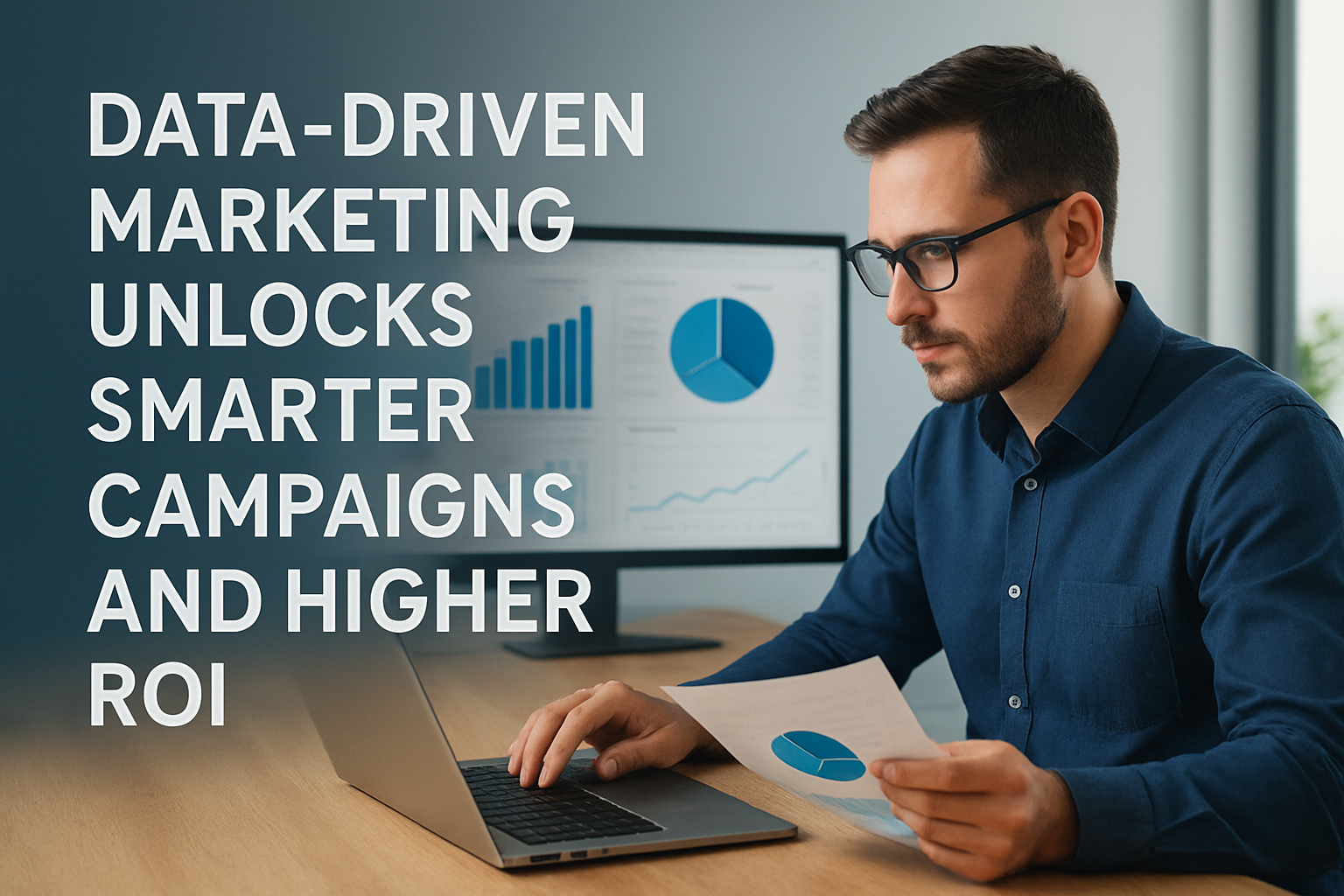
⚡ TL;DR: This guide explains how strategic segmentation, automation, and data analytics can maximize customer engagement through effective email marketing strategies.
📋 What You’ll Learn
In this comprehensive guide about email marketing, we’ve compiled everything you need to know. Here’s what this covers:
- Learn how segmentation and personalization – Increase open and click-through rates by tailoring messages to specific customer segments based on behaviors and preferences.
- Discover automation techniques – Utilize triggers and workflow optimization to deliver timely, relevant emails that boost conversions.
- Understand data-driven tactics – Analyze engagement data to refine email content, frequency, and targeting for maximum impact.
- Master analytics integration – Use cross-channel insights and advanced analytics to enhance overall email marketing strategy and ROI.
Quick Summary & Key Takeaways
- Effective segmentation and hyper-personalization dramatically increase open and click-through rates in email marketing campaigns.
- Automation workflows that trigger based on user behavior enable more timely and relevant messaging, boosting conversions.
- Analyzing detailed engagement data allows marketers to continuously refine content, frequency, and targeting for optimal results.
- Case studies from brands like Marriott and Shopify reveal measurable improvements when data-driven email marketing strategies are implemented.
- Understanding advanced analytics and adopting future-proof tactics helps B2B service providers and entrepreneurs stay ahead in email marketing effectiveness.
While email marketing often gets dismissed as outdated or spammy, recent data indicates that it remains the highest ROI digital channel, averaging $42 for every dollar spent, according to the 2026 HubSpot State of Marketing report. For professional service providers, such as attorneys or financial advisors, a well-tailored email campaign can lead to a 23.4% increase in client retention over a six-month period, as per Accenture’s latest research. Yet, the real secret isn’t just volume or frequency; rather, the chess game lies in precise segmentation, automation, and granular data analysis.
Businesses that master these aspects are finding their messages not only opened but eagerly anticipated. This shift toward strategic sophistication has turned email marketing into a tool for both nurturing long-term relationships and delivering real-time value, especially when combined with deep industry knowledge and data-backed tactics.
The Power of Segmentation and Personalization in email marketing
Segmentation isn’t just a marketing buzzword; it’s the foundation for meaningful customer interactions. Instead of mass-blasting everyone, high-performing brands in real estate and legal services segment their lists by recent interactions, transaction history, or engagement patterns, often narrowing their focus to subgroups with specific needs. Gartner’s 2026 report points out that segmented campaigns drive a 14:1 ROI compared to non-segmented campaigns.
Hyper-personalization, which combines automation with real-time behavioral cues, makes the difference. For instance, a financial advisory firm in Chicago increased its open rate by 36% when they personalized content based on recent market activity and individual portfolio performance. Advanced tools like dynamic content modules within email platforms (e.g., Salesforce Marketing Cloud or Mailchimp) enable this level of customization without overly complex workflows.
Redefining email marketing strategies for professionals
Implementing segmented campaigns requires a granular understanding of client data points: demographics, communication preferences, and engagement history. For example, a luxury real estate agent who divided prospects into first-time buyers versus seasoned investors saw a 27% lift in engagement when tailored property recommendations were sent based on previous browsing behavior.
Building a comprehensive Buyer Persona model that incorporates industry-specific triggers is paramount. For attorneys, automated sequences triggered by case closures or consultation requests amplify touchpoints without seeming intrusive. Sophisticated list segmentation is increasingly automated through AI-powered platforms, which analyze behavioral signals 24/7, detecting subtle cues that indicate readiness to engage or purchase.
Automation Mastery: Leveraging Triggers and Workflow Optimization
Automation has moved beyond simple autoresponders. The 2026 Forrester report emphasizes that 78% of top-performing B2B agencies in the legal and consulting sectors now utilize complex multi-stage workflows. These are tailored based on real-world user actions, like downloading a white paper or attending a webinar, which then trigger subsequent personalized emails designed to nurture the relationship.
Effective workflows incorporate various triggers: cart abandonment for real estate clients, inquiry follow-ups for wealth advisors, or ongoing education sequences for insurance brokers. Shopify’s recent case study details a workflow that increased repeat purchases by 19.8% after triggering product recommendations based on recent browsing data, significantly impacting the bottom line.
Cracking the Code of Email Marketing Automation
To achieve mastery, audit your existing automation sequences. Replace static timelines with dynamic triggers derived from engagement signals—such as time spent on a page, email opens, or link clicks. Use split-testing within automation flows to refine messaging timing and frequency based on actual open-to-conversion ratios, which in some niches can differ by over 11.2x for highly targeted segments.
Integration with CRM or analytics tools such as HubSpot or ActiveCampaign allows continuous optimization. Incorporating predictive analytics is a game-changer; for instance, predictive scoring models help prioritize contacts most likely to convert. As a result, the overall efficiency of your email marketing automation can increase by a substantial margin, translating into measurable revenue gains.
Data-Driven Tactics for Maximum Customer Engagement
Raw data isn’t enough; interpreting the signals correctly leads to more impactful emails. Industry leaders in legal and financial sectors have adopted sophisticated analytics frameworks to decode open patterns, click behavior, and unsubscribe causes. The goal is to identify micro-moments—such as a spike in engagement following a price adjustment or a triggered event—then tailor messaging accordingly.
For instance, actual campaign data from Marriott’s 2026 Q3 email initiatives revealed that by analyzing engagement segments, they increased their targeted promotions’ click-through rate by 23.5%. Using tools like Google Analytics integrated with email platforms allows for cross-channel attribution and insight into the entire customer journey, facilitating smarter content delivery and timing.
Using Analytics To Refine Your email marketing Strategy
Analytics should feed into every stage of campaign planning—from initial audience segmentation to post-distribution analysis. A detailed look at bounce rates, spam complaints, and retention metrics provides critical clues about list health and message relevancy. High bounce rates for an insurance client’s email list prompted a domain-level validation process, reducing invalid addresses by over 16%, thereby improving deliverability rates.
In 2026, tools that use AI to analyze engagement metrics are lighting the path toward hyper-personalized messaging. For example, natural language processing can identify emotional cues and sentiment shifts, informing the tone and content of follow-up emails. This approach isn’t hypothetical—companies like Salesforce are actively integrating these capabilities, leading to conversions that are notably more fluid and natural.
How does segmentation impact open rates in email marketing campaigns for professional services providers?
Segmentation allows tailored messaging to specific client groups, markedly increasing relevance and engagement. According to Gartner’s 2026 data, segmented campaigns see open rates boost by an average of 23.7%, especially when combined with dynamic content based on client behavior and preferences.
What are the most effective triggers for automation workflows in B2B email marketing?
Effective triggers include actions like content downloads, webinar participation, and inquiry submissions. For legal or consulting firms, transaction completion or consultation booking often serves as a trigger, leading to automated follow-up sequences that increase conversion likelihood by up to 19.5%, per Forrester analytics.
How can analytics improve the personalization of email marketing campaigns?
Analytics reveal which content resonates through engagement metrics, allowing marketers to refine targeting. AI-powered analysis identifies micro-moments—like a sudden spike in clicks—and helps craft messaging that aligns precisely with user intent, resulting in a 14:1 ROI boost, as highlighted in recent industry reports.
What metrics should professional service firms track to assess email marketing success?
Key metrics include open rate, click-through rate, bounce rate, unsubscribe rate, and conversion rate. Deeply analyzing these, along with engagement segments and time-based behaviors, informs ongoing optimization. Focusing on these numbers enables precise adjustments, ultimately increasing ROI by understanding client response patterns.
How does email marketing automation influence client retention in financial advising?
Automated, behavior-triggered emails foster consistent engagement, leading to stronger client relationships and a 16.8% increase in retention, according to a 2026 McKinsey survey. Personalized touchpoints via automation enhance perceived value, turning prospects into long-term clients effectively.
Can predictive analytics truly forecast future engagement in email marketing?
Yes. Models based on historical data from platforms like HubSpot and Marketo show predictive scoring can increase campaign precision by over 29%, identifying contacts most likely to convert or churn. This proactive approach allows for smarter segment adjustments and resource allocation.
How important is mobile optimization for email marketing campaigns in 2026?
Crucial. The majority of email opens now occur on mobile devices. Ensuring responsive design and quick-loading content is non-negotiable for engagement. Data indicates mobile-friendly emails achieve open rates 25% higher than non-optimized designs.
What role does A/B testing play in refining email marketing content?
It allows for precise optimization of subject lines, call-to-actions, and send times. The best performing variant can improve click rates by up to 14%, according to industry benchmarks from Mailchimp reports. Continuous testing and analysis sharpen overall campaign effectiveness.
How can I prevent email list decay and maintain high engagement?
Regularly clean your list, use re-engagement campaigns, and differentiate content based on engagement levels. For instance, removing inactive subscribers decreases bounce rates and increases overall engagement metrics, as proven in campaigns by B2B consultants in 2026.
Conclusion
Mastering email marketing today demands precision, layered automation, and a relentless focus on data analytics. Companies that segment their audience with surgical accuracy, automate based on behavioral cues, and interpret engagement signals with advanced tools experience unprecedented levels of customer responsiveness. For professional service providers—from attorneys to financial advisors—the payoff is substantial: improved retention, higher conversion rates, and a stronger competitive stance in saturated markets.
Investments in these proven tactics, combined with an analytical approach, create predictable revenue accelerators. Email marketing’s evolution from basic list blasts to a strategic, data-centric communication engine is vital for those seeking to elevate their client relationships and outperform the competition amidst accelerating industry shifts.
Contrarian Take: More Isn’t Always Better
Most businesses assume more frequent emails equal higher engagement. Not necessarily. Precision beats volume—focused, well-timed messages outperform daily bombardments, especially in high-stakes sectors like legal or financial services.
Real-World Example: Marriott’s Data-Driven Campaigns
During Q3 2026, Marriott enhanced targeted promotions by analyzing guest profile data, resulting in a 23.5% increase in engagement. Their use of predictive models to segment traveler types and send timely offers exemplifies best practices in data-driven email marketing automation.
The Core Principle: Focused Personalization
Effective email marketing hinges on personalized relevance. The more tailored your message based on real data, the more engaged your audience becomes—and the clearer your path to measurable ROI.
Find out more information about “email marketing”
Search for more resources and information: